goodreads
goodreads
Simplified. Motivating. User-first.
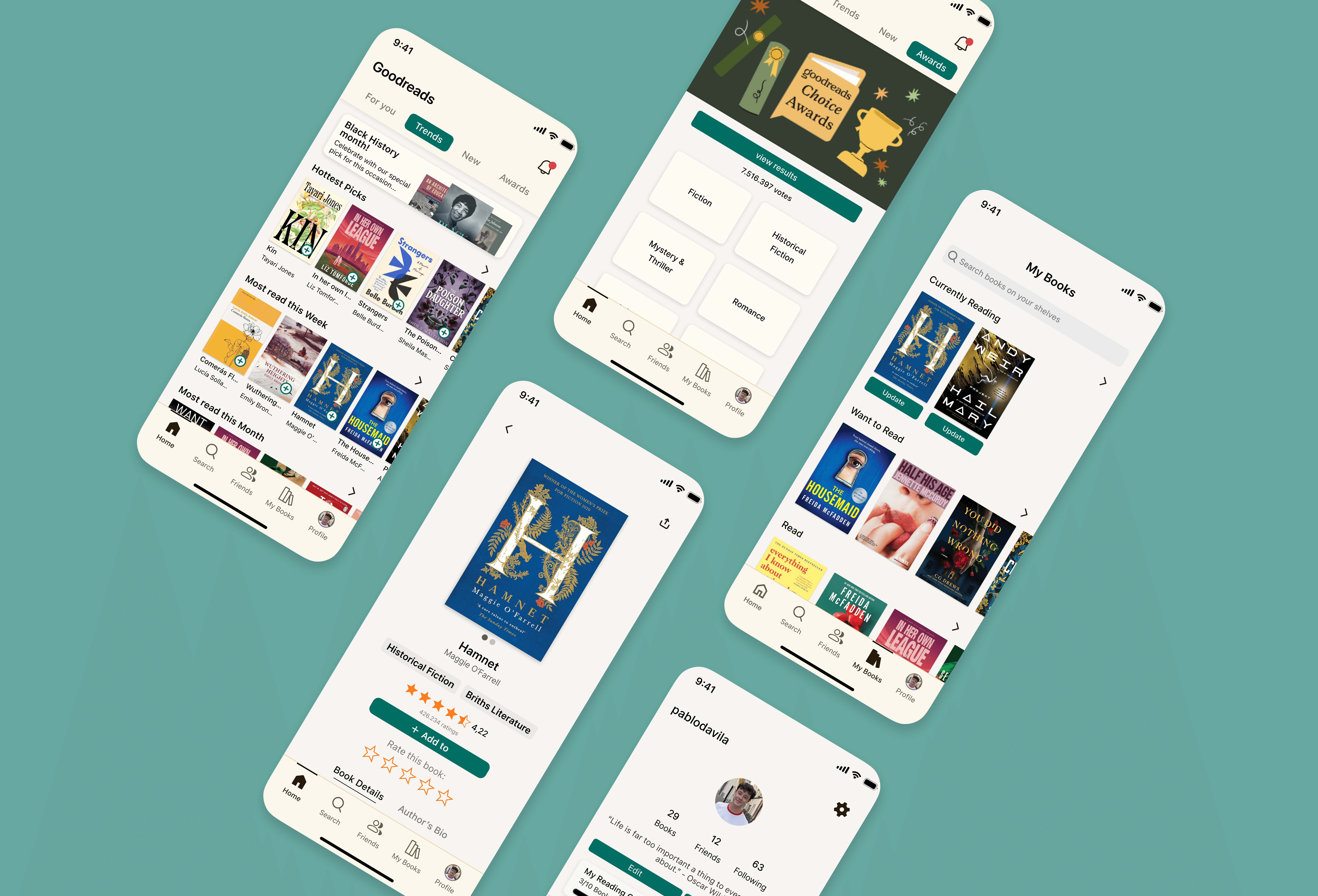
A redesign of Goodreads mobile app, focused on clarity, discovery, and social motivation.
My Role
UX Researcher & Strategy
Information Architect
Interaction Designer
UI Desginer
Tools



Duration
8 weeks
Simplified. Motivating. User-first.
A redesign of Goodreads mobile app, focused on clarity, discovery, and social motivation.
My Role
UX Researcher & Strategy
Information Architect
Interaction Designer
UI Desginer
Tools
Duration
8 weeks
2026
App
Redesign
2026
App
Redesign

Final thoughts
Reflecting on the redesign
Reflecting on the redesign
This project highlighted how improving structure and clarity can significantly impact the overall user experience.
By focusing on information architecture and user intent, the redesign transforms Goodreads into a more intuitive and engaging platform.
This project highlighted how improving structure and clarity can significantly impact the overall user experience.
By focusing on information architecture and user intent, the redesign transforms Goodreads into a more intuitive and engaging platform.
Key Learnings
Key Learnings
Structure defines experience
A clear architecture is essential before visual design.
Less is more
Reducing complexity improves usability and engagement.Design for intent
Understanding user goals leads to better decisions.
Structure defines experience
A clear architecture is essential before visual design.
Less is more
Reducing complexity improves usability and engagement.Design for intent
Understanding user goals leads to better decisions.
What I'd improve next
What I'd improve next
User testing to validate the new flows
Refining microinteractions and animations
Expanding accessibility considerations
User testing to validate the new flows
Refining microinteractions and animations
Expanding accessibility considerations
To conclude…
To conclude…
This redesign shows that the problem was never the product itself, but how it was structured.
By simplifying the architecture and designing around user intent, Goodreads becomes a clearer, more focused, and more engaging experience.
A product that not only helps users track their reading, but truly supports how they discover, connect, and grow as readers.
This redesign shows that the problem was never the product itself, but how it was structured.
By simplifying the architecture and designing around user intent, Goodreads becomes a clearer, more focused, and more engaging experience.
A product that not only helps users track their reading, but truly supports how they discover, connect, and grow as readers.
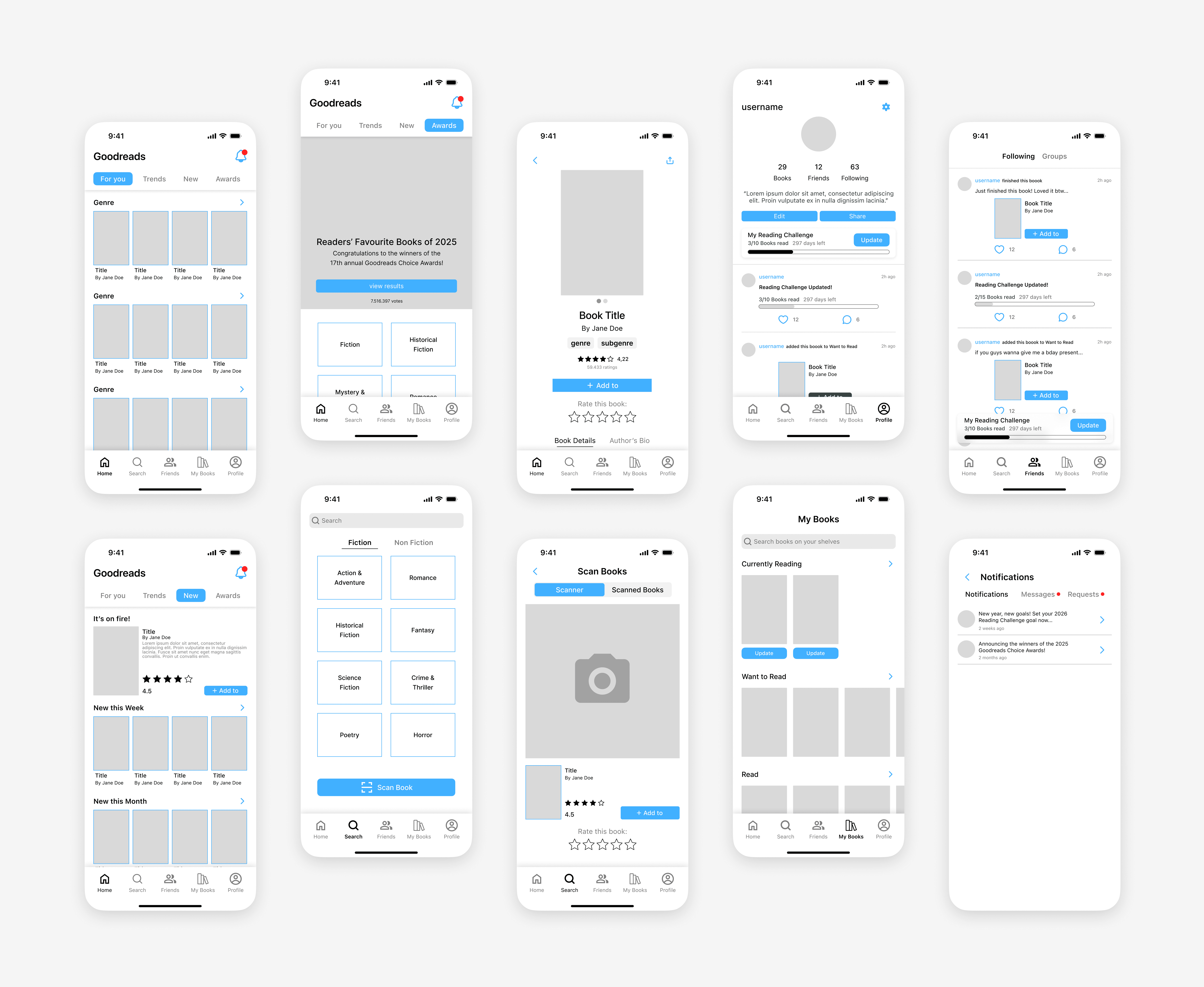
Home
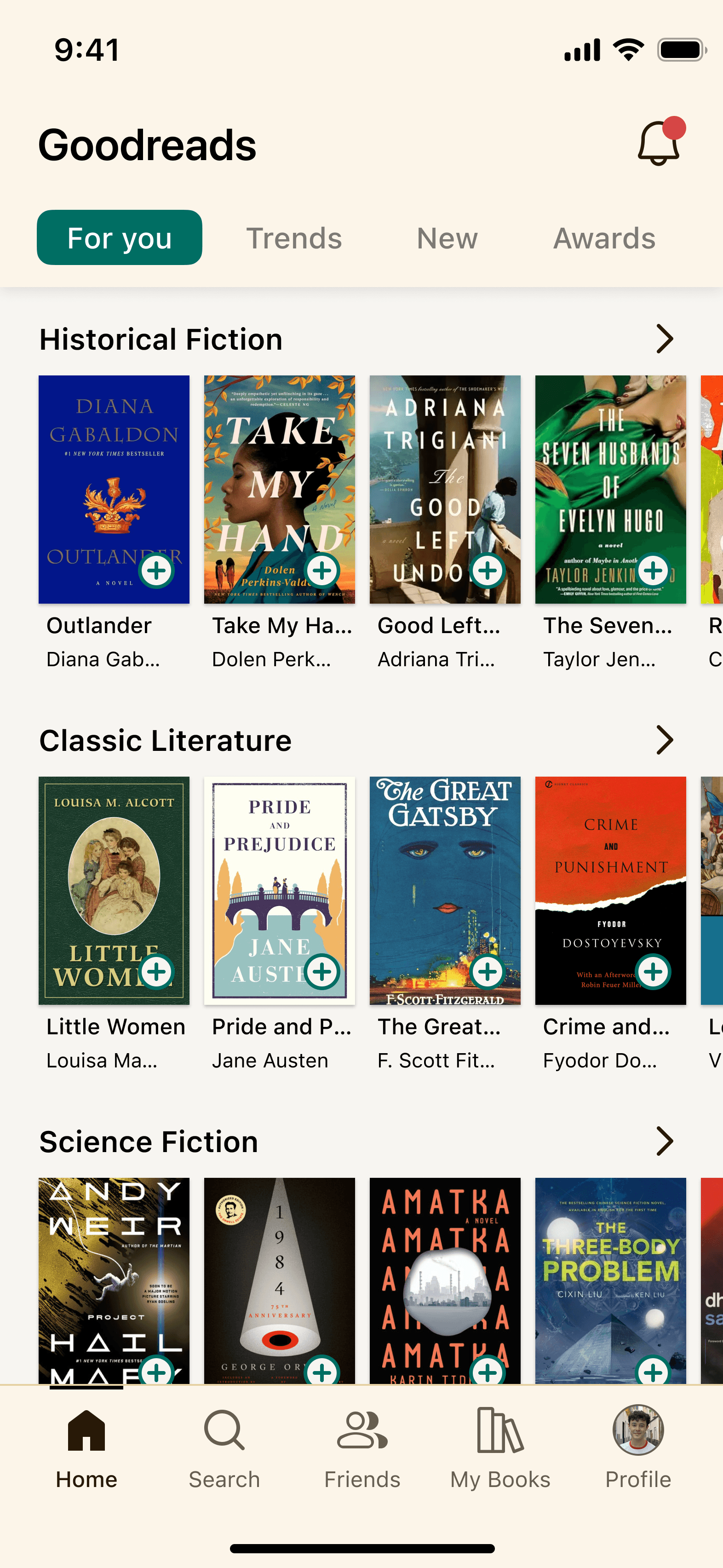
A space dedicated to recommendations, trends, news and the Goodreads Awards section with access to notifications
Home
A space dedicated to recommendations, trends, news and the Goodreads Awards section with access to notifications
Friends
This space is dedicated to users friends news and posts. It shows a small display of the personal Reading Challenge and access to reading groups.
Friends
This space is dedicated to users friends news and posts. It shows a small display of the personal Reading Challenge and access to reading groups.
Profile
After creating a new structure for the profile, a "share QR" has been added to ease the task of adding friends.
Profile
After creating a new structure for the profile, a "share QR" has been added to ease the task of adding friends.
Search
A more clean Search page with a display of genres and access to Scan tool.
The Search bar includes filters to help users find what they may be looking for (books, editors, other members…)
Search
A more clean Search page with a display of genres and access to Scan tool.
The Search bar includes filters to help users find what they may be looking for (books, editors, other members…)
My Books
This personal page gives user direct access to their own libraries with a search bar to improve its use.
My Books
This personal page gives user direct access to their own libraries with a search bar to improve its use.
Wireframes

Wireframes
Before
Before
Mixed content (social + discovery + personal)
Confusing navigation
Key features buried
Mixed content (social + discovery + personal)
Confusing navigation
Key features buried
After
After
Clear section purposes
Predictable navigation
Improved feature visibility
Clear section purposes
Predictable navigation
Improved feature visibility
Overview
Overview
Each section is designed around a specific user intention:
Home: Discover books through curated content
Search: Quickly find books and authors
Community: Interact with friends and track shared activity
My Books: Manage personal library and reading progress
Profile: Edit and share profile. Access to personal posts.
Each section is designed around a specific user intention:
Home: Discover books through curated content
Search: Quickly find books and authors
Community: Interact with friends and track shared activity
My Books: Manage personal library and reading progress
Profile: Edit and share profile. Access to personal posts.
The goal was to create an interface that feels calm, intuitive, and aligned with the reading experience, while supporting key user actions without adding visual noise.
The goal was to create an interface that feels calm, intuitive, and aligned with the reading experience, while supporting key user actions without adding visual noise.
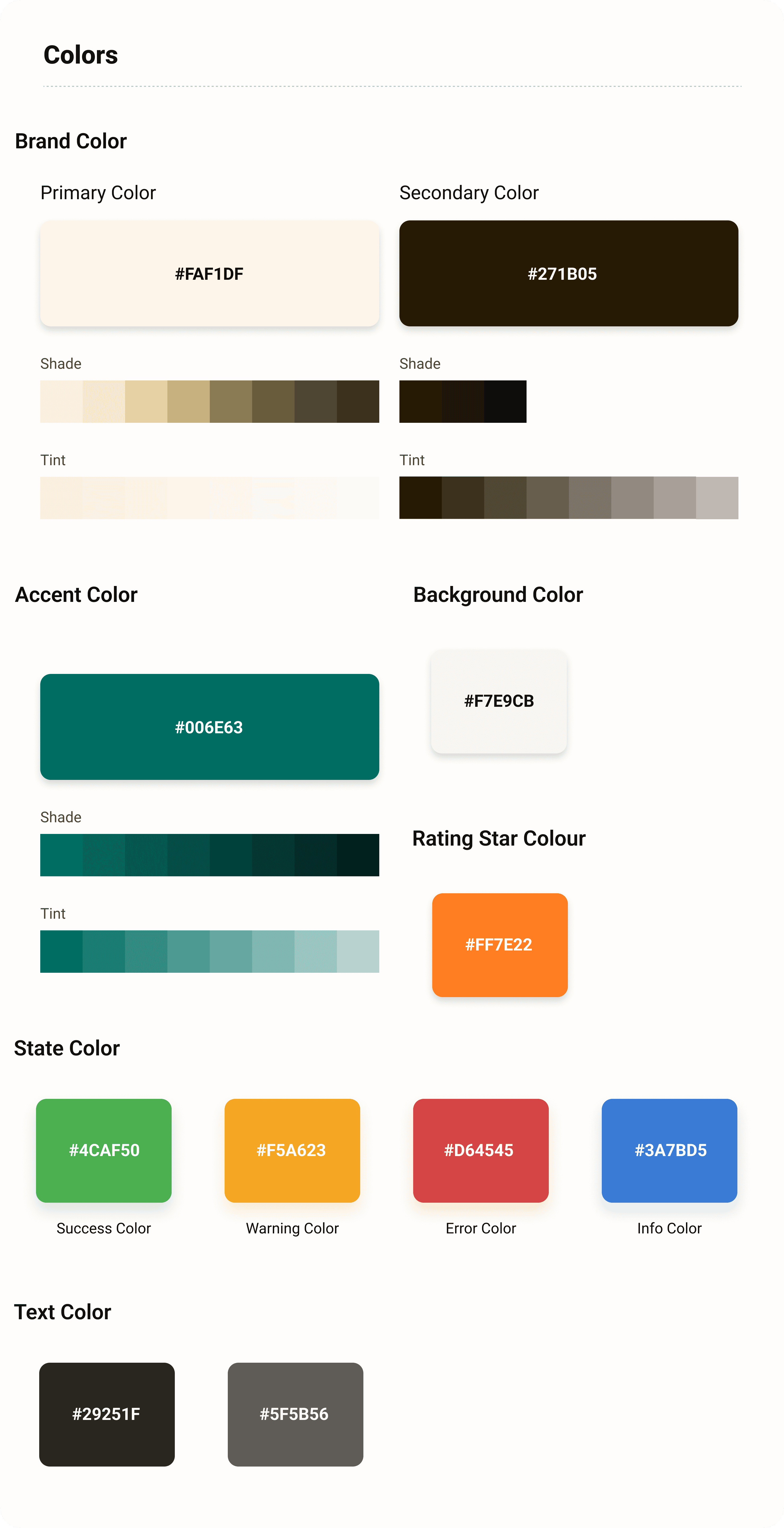
The color system prioritizes warm neutral backgrounds inspired by paper textures, reinforcing the reading experience while maintaining strong contrast and accessibility.
The color system prioritizes warm neutral backgrounds inspired by paper textures, reinforcing the reading experience while maintaining strong contrast and accessibility.
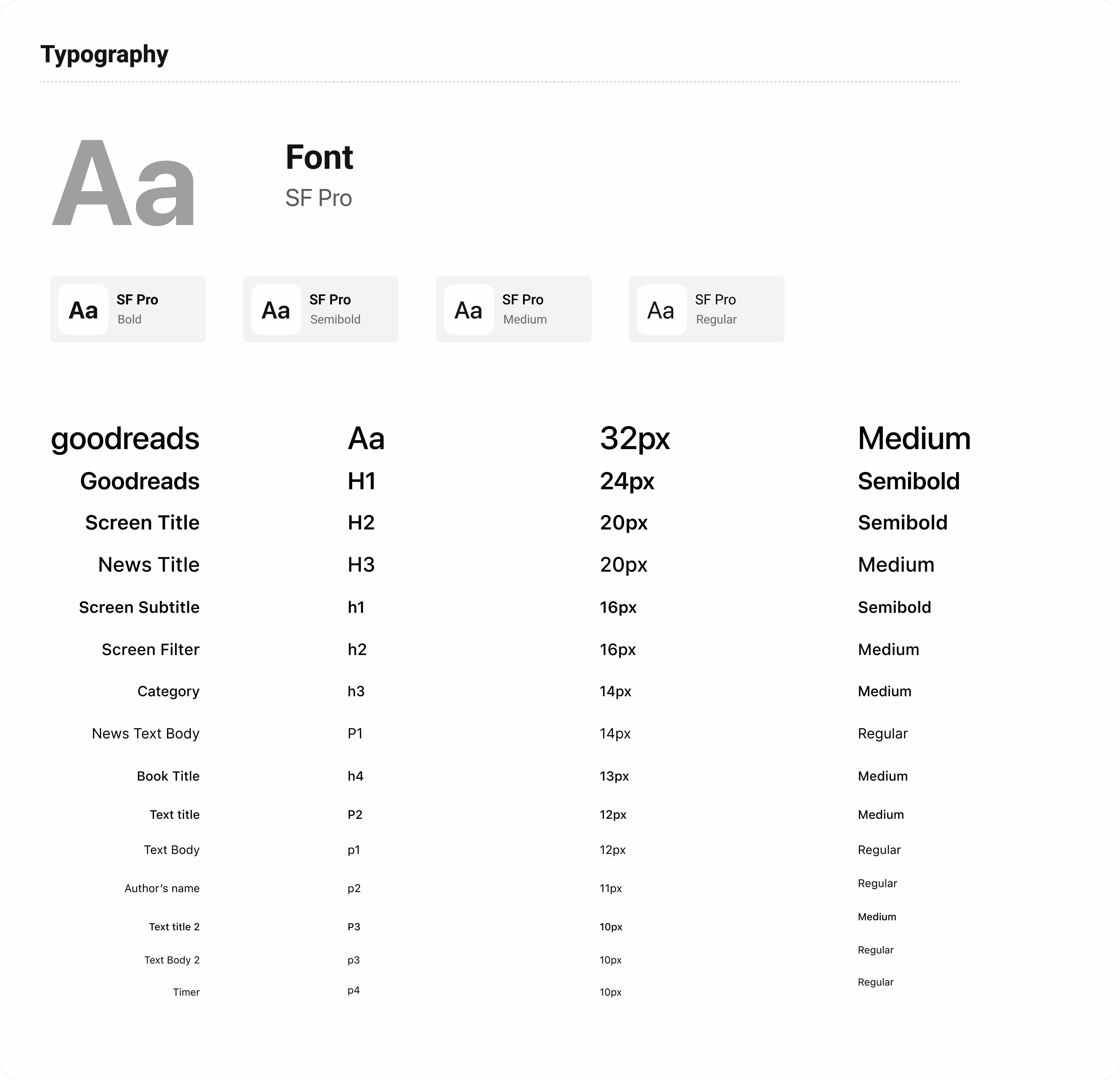
The visual design enhances the experience by supporting clarity, rather than competing with it.
The visual design enhances the experience by supporting clarity, rather than competing with it.
“It’s hard to access
my reading space.”
“I wish it was more organized and appealing…”
“I don’t clearly understand how
to add friends or use groups.”
My Design Process
My Design Process
Research
Research
Goodreads is not failing because of what it offers, but because of how it organizes it.
Goodreads is not failing because of what it offers, but because of how it organizes it.
Problem Statement
Problem Statement
Key issues
Key issues
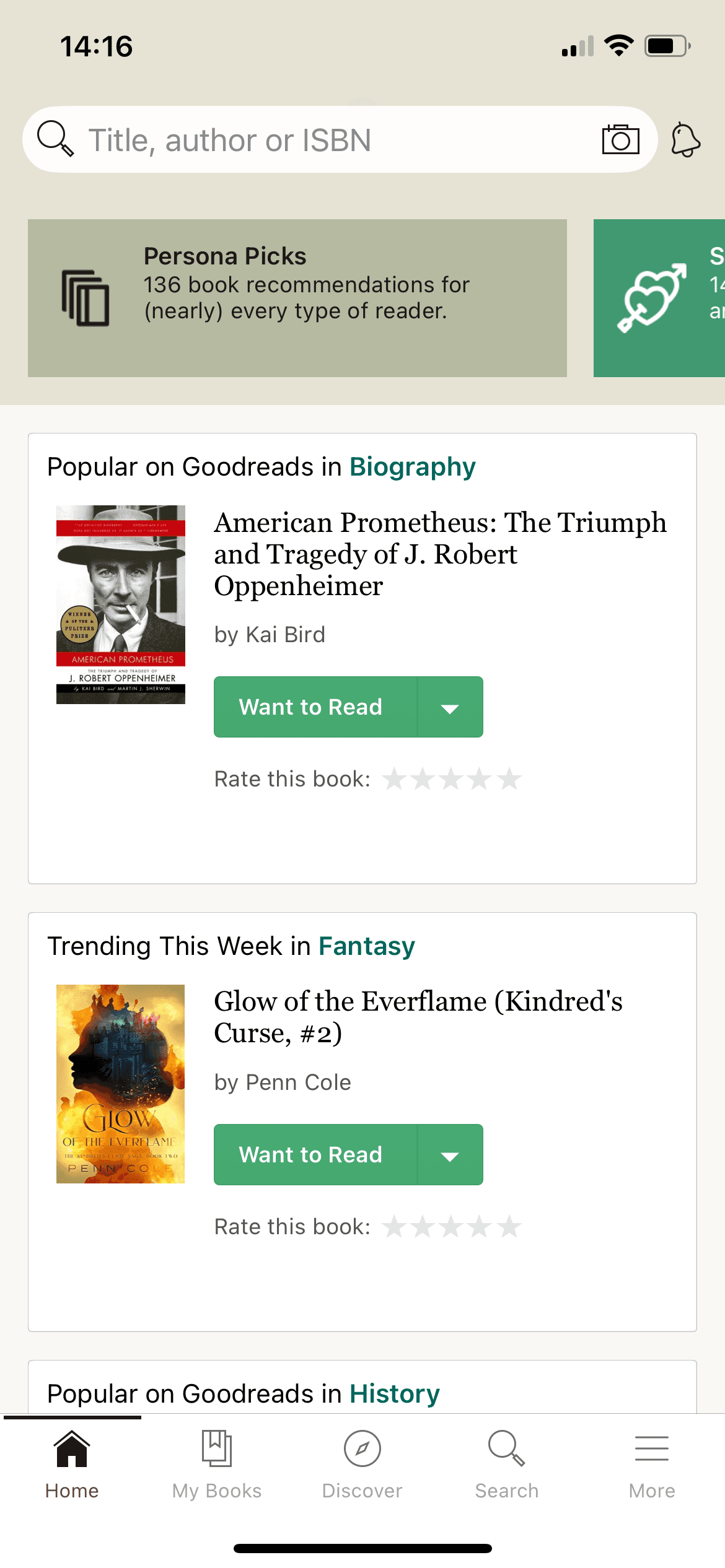
Goodreads offers a rich ecosystem for readers, but its mobile experience lacks clarity and structure.
By combining discovery, social interaction, and personal tracking within the same spaces, the app creates a cluttered interface and confusing navigation.
Users struggle to understand where to go based on their goals, increasing cognitive load and reducing engagement with key features.
Goodreads offers a rich ecosystem for readers, but its mobile experience lacks clarity and structure.
By combining discovery, social interaction, and personal tracking within the same spaces, the app creates a cluttered interface and confusing navigation.
Users struggle to understand where to go based on their goals, increasing cognitive load and reducing engagement with key features.
Unclear information architecture
Multiple user goals are mixed within the same sections, making navigation confusing.
Content overload
Feeds combine recommendations, updates, and social activity without clear hierarchy.Poor task separation
Discovery, search, and social interaction are not clearly differentiated.Low visibility of key features
Important tools like the Reading Challenge or Scan lack proper prioritization.
Unclear information architecture
Multiple user goals are mixed within the same sections, making navigation confusing.
Content overload
Feeds combine recommendations, updates, and social activity without clear hierarchy.Poor task separation
Discovery, search, and social interaction are not clearly differentiated.Low visibility of key features
Important tools like the Reading Challenge or Scan lack proper prioritization.
Goodreads is a platform with a strong community and rich content, but its mobile experience suffers from cluttered navigation and unclear content hierarchy.
This project focuses on redesigning the app’s structure to create a more intuitive and task-driven experience, improving how users discover books, interact with friends, and track their reading progress.
By rethinking the information architecture and simplifying key flows, the redesign transforms Goodreads into a clearer, more engaging product for modern readers.
Goodreads is a platform with a strong community and rich content, but its mobile experience suffers from cluttered navigation and unclear content hierarchy.
This project focuses on redesigning the app’s structure to create a more intuitive and task-driven experience, improving how users discover books, interact with friends, and track their reading progress.
By rethinking the information architecture and simplifying key flows, the redesign transforms Goodreads into a clearer, more engaging product for modern readers.
This project followed a user-centered process, starting with research to identify key pain points and user needs, and evolving into a complete redesign of the app’s structure and experience.
This project followed a user-centered process, starting with research to identify key pain points and user needs, and evolving into a complete redesign of the app’s structure and experience.
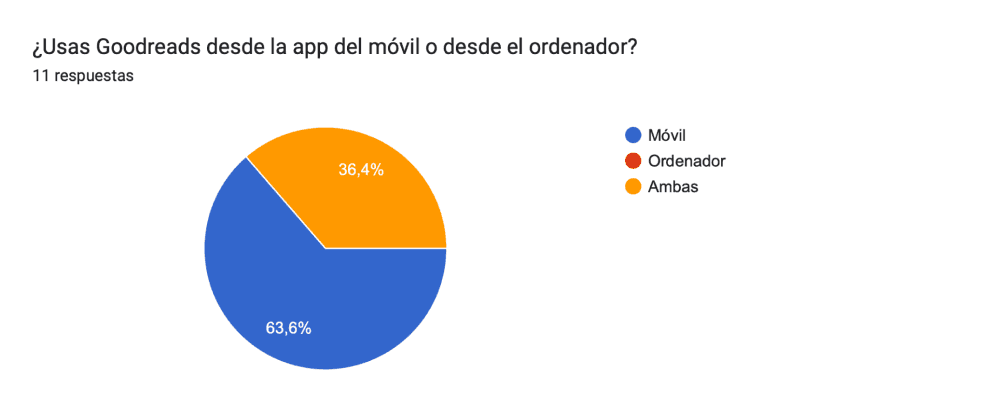
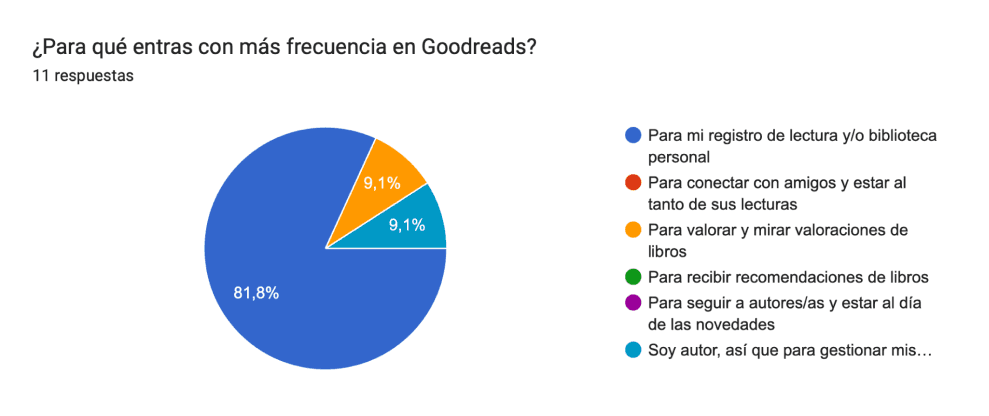
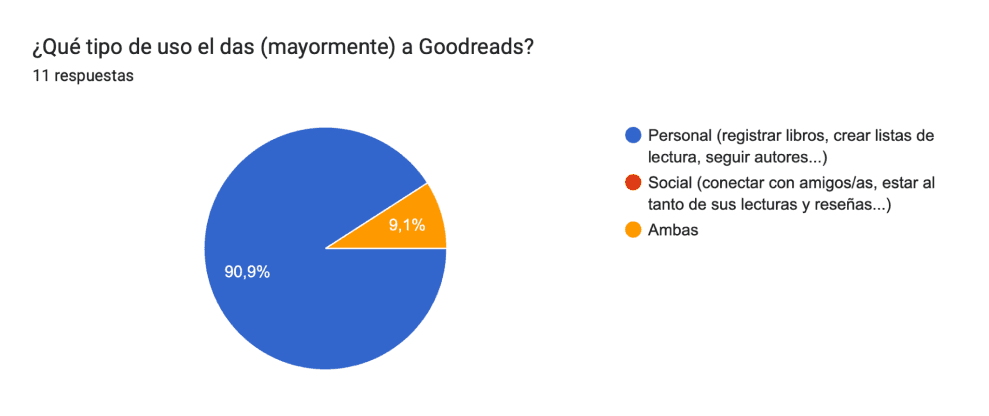
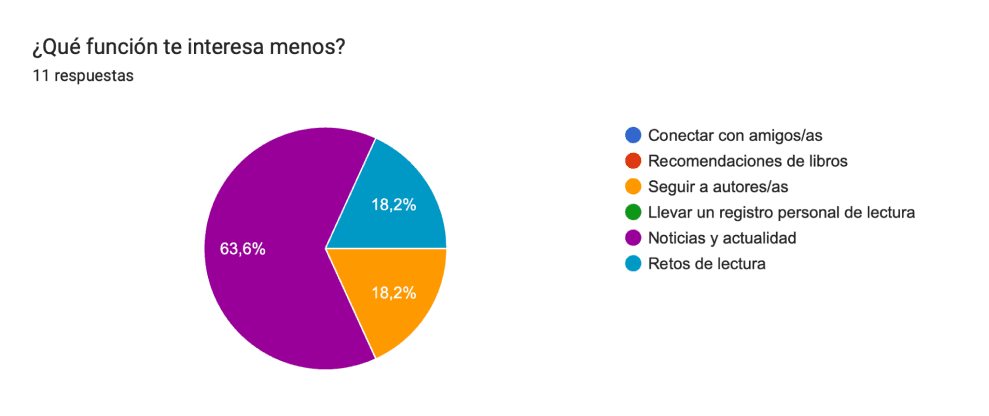
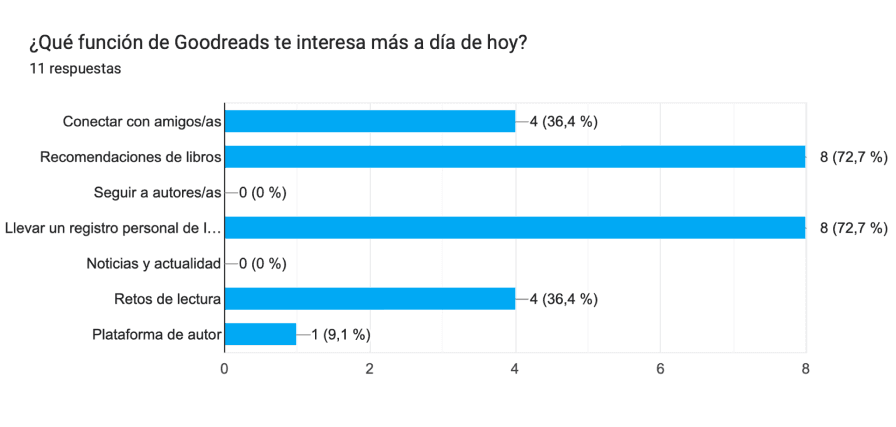
To better understand user behavior, I conducted a survey focused on how people use Goodreads and which features they value the most.
The results revealed a clear pattern:
72.7% of users prioritize book recommendations and personal reading tracking
81.8% primarily use the app to manage their personal library
63.6% access Goodreads mainly on mobile
90.9% use the app for personal purposes rather than social interaction
At the same time, features like news and updates showed low interest, with 63.6% of users considering them the least relevant.
To better understand user behavior, I conducted a survey focused on how people use Goodreads and which features they value the most.
The results revealed a clear pattern:
72.7% of users prioritize book recommendations and personal reading tracking
81.8% primarily use the app to manage their personal library
63.6% access Goodreads mainly on mobile
90.9% use the app for personal purposes rather than social interaction
At the same time, features like news and updates showed low interest, with 63.6% of users considering them the least relevant.
User feedback highlighted several recurring issues:
Difficulty navigating the app and accessing key sections
Confusion around social features like friends and groups
Poor visibility of personal reading tools
Overall, users expressed the need for a more organized, intuitive, and visually clear interface.
User feedback highlighted several recurring issues:
Difficulty navigating the app and accessing key sections
Confusion around social features like friends and groups
Poor visibility of personal reading tools
Overall, users expressed the need for a more organized, intuitive, and visually clear interface.
The original app mixed multiple user goals within the same spaces, creating confusion and cognitive overload.
To solve this, I restructured the app into a task-based architecture, separating core user needs into clear, intuitive sections.
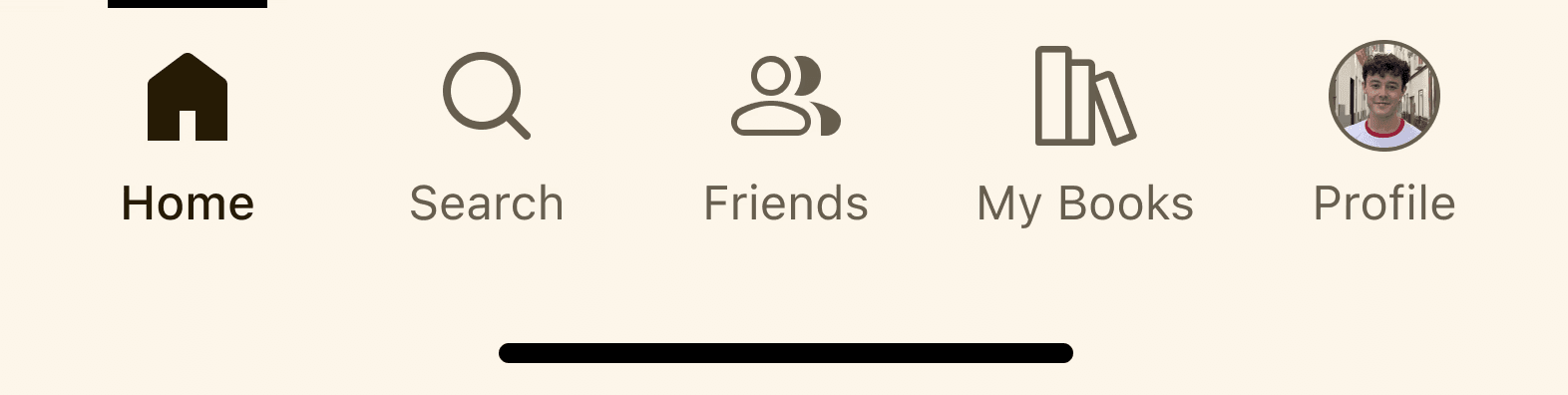

This led to a sitemap-first approach, redefining the app into five clear sections: Home, Search, Friends, My Books and Profile.
The original app mixed multiple user goals within the same spaces, creating confusion and cognitive overload.
To solve this, I restructured the app into a task-based architecture, separating core user needs into clear, intuitive sections.
This led to a sitemap-first approach, redefining the app into five clear sections: Home, Search, Friends, My Books and Profile.
Key insights
Key insights
Information Architecture: the Sitemap
Information Architecture: the Sitemap
Style Guide
Style Guide
Prototype
Prototype